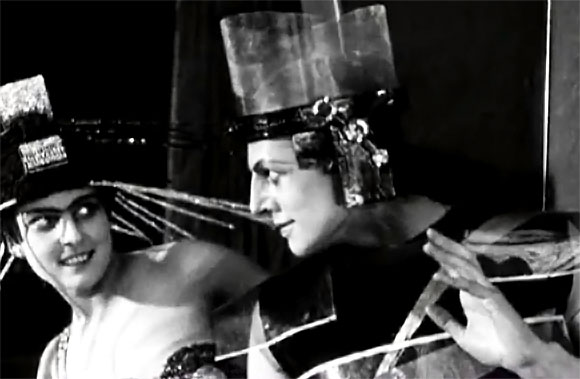
Aelita Queen of Mars: First Russian Science Fiction Film 1924

This is regarded as being the first Soviet science fiction film. Made in 1924, it’s an operatic scenario involving a mysterious radio signal sent toward earth, a scientist who builds a spaceship to get to the red planet only to find a totalitarian state, and a dictator’s daughter who wants to lead a revolution. There’s even a hammer and sickle to go along with the establishment of a socialist republic on Mars.

The film combines outlandish stage scenery representing Mars with the gritty streets and factories of Moscow. There’s some really beautiful photography and truly absurd costumes throughout.

Directed By Yakov Protozoan
Written By Aleksei Fajko and Fyodor Otsep
Based On A Play By Aleksei Tolstoy

All six parts of the film can be seen in this YouTube playlist.
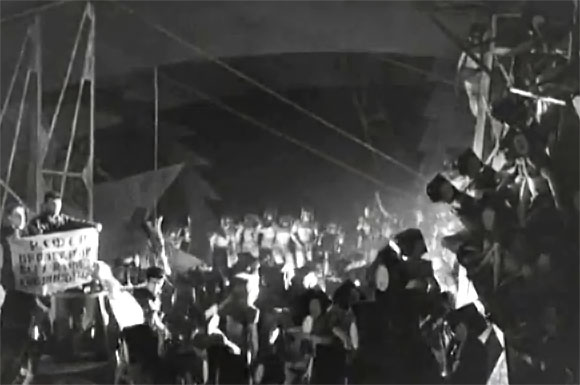
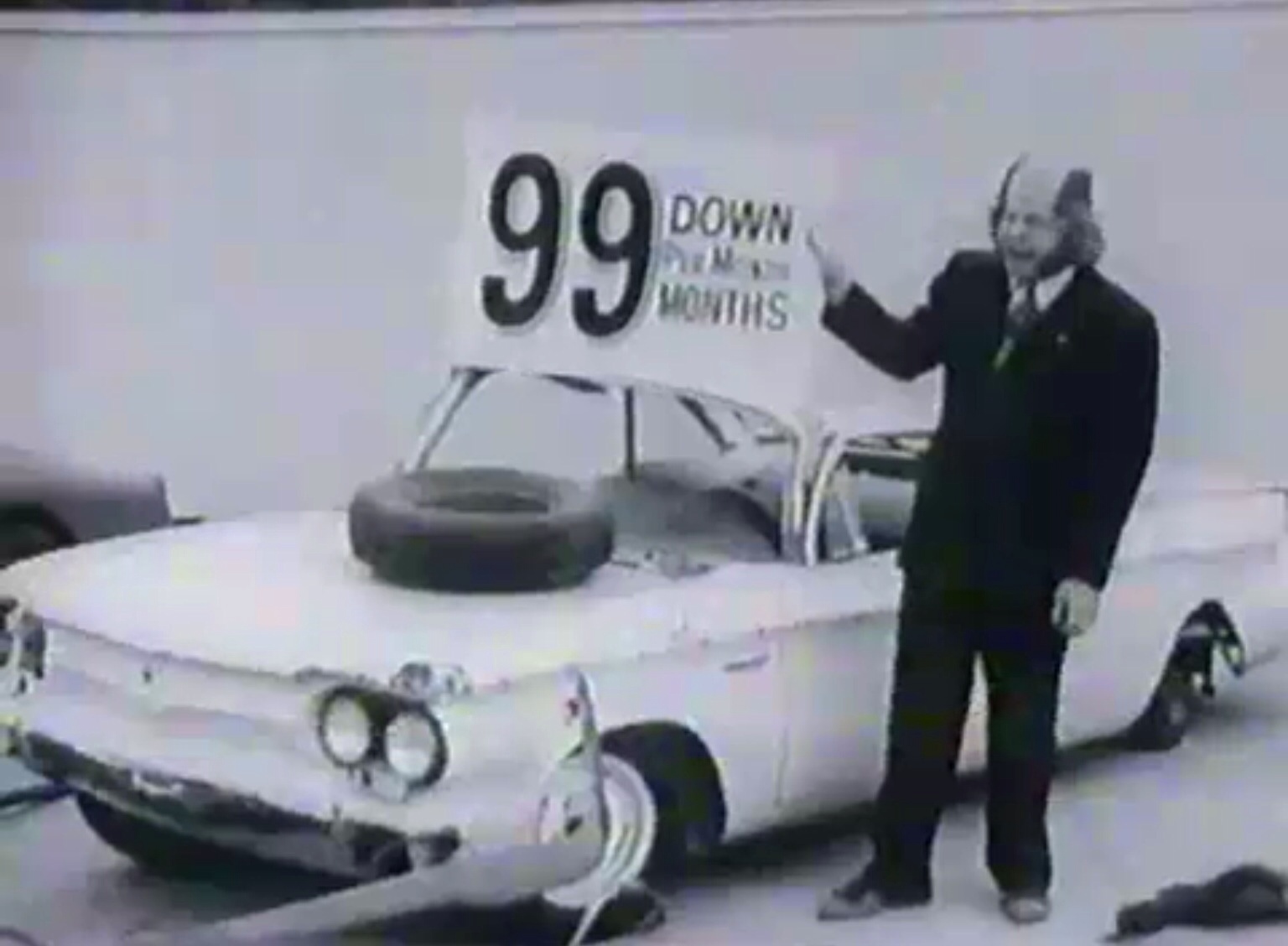
Dad, Can I Borrow the Car? 1970 Disney Driver Education Film


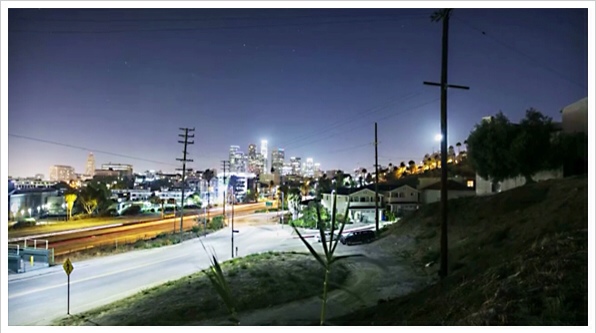
Disney produced this amazingly good drivers education film in 1970. It is one of those cheerfully playful experiments with common avant-garde techniques that were so much a part of seventies culture because of shows like Sesame Street. The filmmaking is generally quite good and sometimes even approaches brilliance. I've been working vaguely and lazily on a new film about cars and Los Angeles and I'm quite prepared to lift some things right out of this film or at least use it as a template for commenting on car culture in this great throbbing fast lane metropolis.
 
Kurt Russell of ham acting fame gives the narration and he's actually good, playing the young man in school who is about to go for his driving test and qualify for the license to kill that will get him lots of action as long as he looks out for little girls chasing big red balls into the street.
 
Enjoy a trip through Los Angeles of yesteryear and remember that cars just work better out here.


Death in Syria – How Global Post’s Tracey Shelton Captured Her Iconic War Images

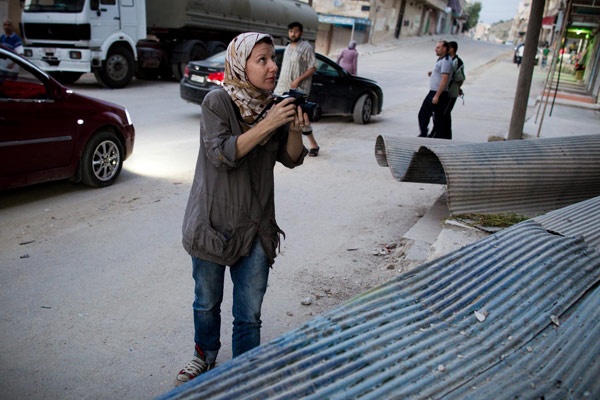
Tracey Shelton, a photojournalist working for Global Post was on the Syrian civil war front lines in the city of Aleppo, covering a group of rebel fighters who were manning a barricade position. She was using a Canon 7D DSLR camera to take video as the fighters prepared for the possible approach of some tanks. They were caught unprepared and her camera captured the moment when they were killed by a tank shell. The resulting images have become some of the most direct examples of just how suddenly death can come in war. They are a shocking reminder of war’s brutality. The bravery she must have to sneak around those streets with only a camera to defend herself from snipers, tanks and rocket propelled grenades is astounding. I think I would simply put my camera away and run.

DSLR News Shooter has an in-depth article about the photographer.

The photo of Tracey Shelton is by Niklas Meltio.

The original video of the terrible moment in a short documentary is shown here:

http://www.youtube.com/watch?v=nsJh67GjjPI

Here is an interview with the photojournalist about how she got her images:

http://vimeo.com/49395813

Toc Toc… Toc: 1965 Animation by Luis Bras

Here is an interesting character from Argentina who was a graphic arts professor and advertising agency designer. After getting hold of a 16mm film camera, he began teaching himself to animate by watching Disney movies. In the early sixties he met pioneering experimental animator Norman McLaren and upon seeing his work began his serious experimental career with direct painting and scratching on film emulsion.
 
Toc Toc… Toc features scratching and painting on film timed to a soundtrack consisting of a pencil hitting a tabletop.
 
Here are some of the Argentine television commercials that Bras worked on.


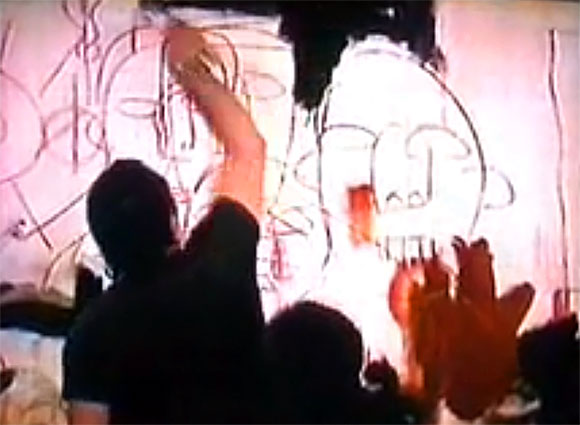
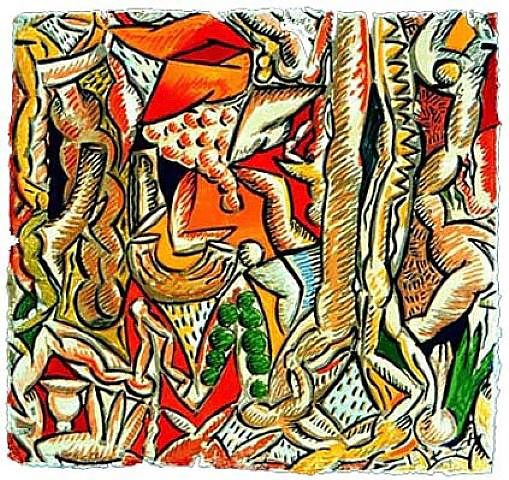
Tormenta by Los Angeles Artist Gronk

 
Whenever I'm in a Los Angeles art gallery if I notice a piece by Gronk I always get snagged and hang around in front of it for too long. I tire easily of galleries and museums because of the general impatience you encounter in those places. People are at their absolute bottom level of stupidity when they saunter through a gallery, stopping for just an exquisitely timed observation period sometimes directly in front of where you happen to be standing. They also tend to move around a room in the same direction, going with the flow or listening to their little tape-recorded tours. I like to go backwards and jam these people up a little. I also like to massively flirt with pretty women but often get into trouble with their boyfriends whom I haven't noticed lurking in the opposite corner.
 
Gronk makes me feel at home in a gallery because I like to stand before greatness. I'm not fond of the equalization of creativity. This guy just casually blows everything off the walls like he's the kind of great artist we made in the time of Pollock. There's an air of hard-edged bohemian mixed with muralist mixed with art history scholar. In other words, he knows what he’s doing. He's got an enormous classical underpinning that may sometimes get obscured if you too closely associate him with the Los Angeles street. I mean classical in the more inaccurate general sense of an artist that has a deep connection to the artists and major movements that came before him. I see a calm and understanding continuation of American art history coming through the few Gronk works I have had the pleasure of standing in front of.
http://www.youtube.com/watch?v=nxbgDQHRyks
 
Gronk on ArtNet.
L.A. Times 2005 profile of Gronk
Complete list of works